What Keeps It Alive.
6 min read
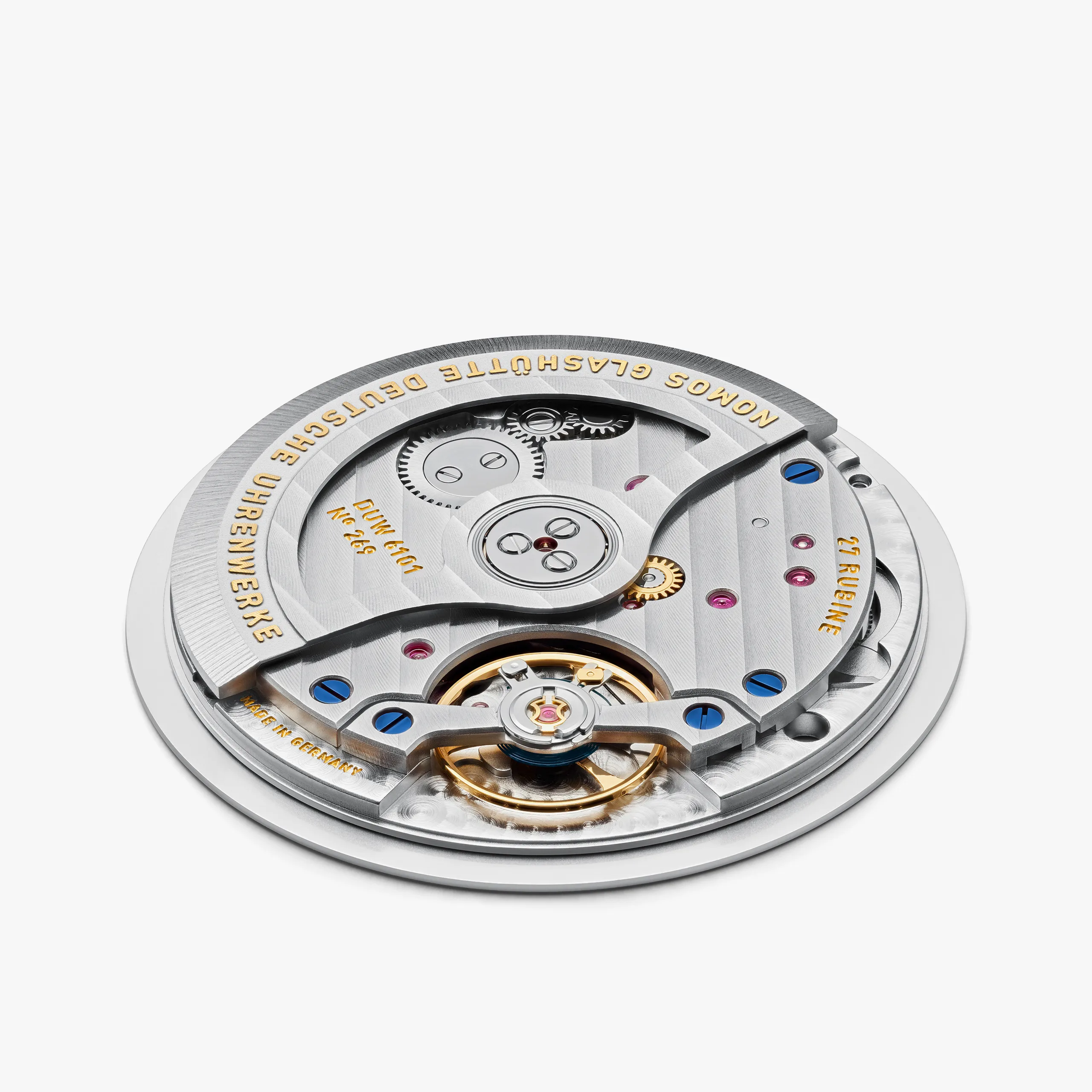
An automatic movement is a mechanical caliber that winds its own mainspring through the motion of your wrist. Inside the case, a weighted rotor spins freely as you move your arm. That rotation transfers energy through a series of gears to the mainspring, storing the power that keeps the watch running.
The word "automatic" is generous. The watch does not run on its own. It runs on you. Stop wearing it for a day or two and the mainspring unwinds completely. The hands stop. The time is lost. You start over.
This is not a flaw. It is the nature of the mechanism. A mechanical watch is a relationship, not a tool.
How it differs from manual
A manual movement does the same thing, but you provide the energy yourself by turning the crown. An automatic simply adds the rotor to do that work for you during wear.
Both store energy in a mainspring. Both regulate time through the oscillation of a balance wheel. The difference is only in how the spring gets wound. Everything after that is identical physics.
What to know
Most automatics have a power reserve between 38 and 72 hours. That number tells you how long the watch keeps running after you take it off. A 42 hour reserve means Friday evening to Sunday morning. A 72 hour reserve gets you through a full weekend without thinking about it.
Accuracy is lower than quartz. A well-regulated automatic might drift 5 to 10 seconds per day. A cheap quartz loses that much per month. If precision is your priority, automatic is not the answer. If the experience of wearing a living mechanism matters to you, nothing else comes close.
The designer's take
The automatic rotor is one of the few mechanical components that is almost always visible. Through a transparent case back, you see it spin. Its shape, weight distribution, and finishing are design decisions that affect both function and aesthetics.
Some brands treat the rotor as an afterthought. Others engrave it, skeletonize it, or position it off-center to reveal more of the movement underneath. How a brand handles the rotor tells you something about how they think about the relationship between engineering and design.
Pay attention to it. It is the first moving part most people notice when they flip a watch over.
Codex. Entry 001. Horo Log